
Hearty Homemade Beef Stew- Easy Comfort Food Recipe
Homemade beef stew is more than just a meal; it’s a warm embrace on a chilly evening, a comforting memory in a bowl. There’s an undeniable magic to a pot of slow-simmered goodness, a symphony of tender beef, robust vegetables, and a rich, savory broth that coats every ingredient. Why do we return to this classic time and time again? It’s the deep, satisfying flavor that only develops with patience, the way the beef melts in your mouth, and the wholesome goodness of carrots, potatoes, and celery soaking up all that delicious liquid. What truly makes homemade beef stew so special is the love and time poured into its creation. It’s a labor of love that rewards you tenfold with every spoonful, creating an experience that nourishes not just the body, but the soul.

Homemade Beef Stew
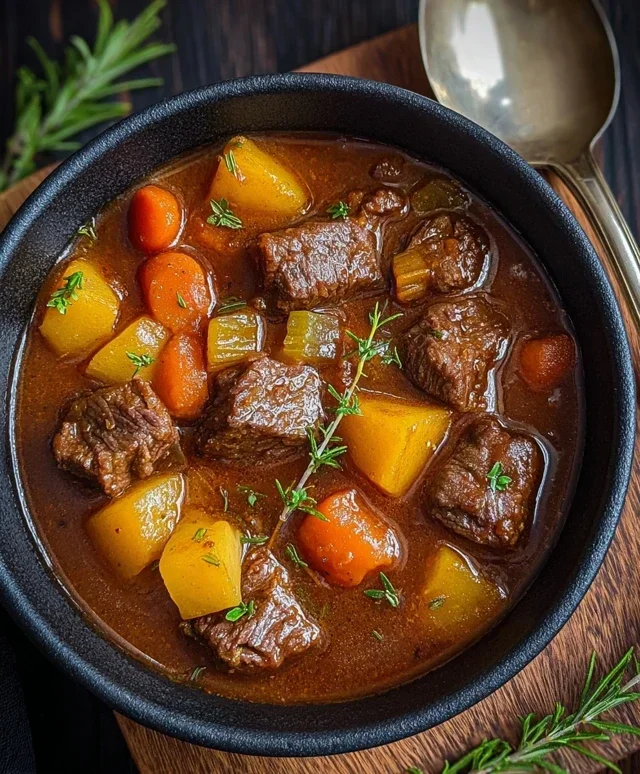
There’s something incredibly comforting about a bowl of rich, hearty beef stew. The kind that warms you from the inside out, with tender chunks of beef, soft vegetables, and a deeply flavorful broth. Making it from scratch might seem daunting, but I promise you, it’s a labor of love that is incredibly rewarding. This recipe is my go-to for a reason – it’s simple, packed with flavor, and always a crowd-pleaser. We’re going to build layers of deliciousness, starting with perfectly browned beef and ending with a stew that tastes like it’s been simmering for days.
Ingredients:
Cooking Instructions:
1. Prepare the Beef for Browning: The first crucial step to a deeply flavored stew is browning the beef properly. This process, known as the Maillard reaction, creates those wonderful savory notes that are the foundation of great stew. In a medium bowl, toss the beef chunks with the kosher salt and black pepper. Make sure each piece is lightly and evenly coated. Next, sprinkle the gluten-free flour (or whole wheat flour) over the seasoned beef. Toss gently until the flour lightly coats the beef. The flour will help thicken our stew later and also contributes to a richer crust on the beef. Don’t over-flour; you just want a thin, even coating.
2. Sear the Beef: Heat the olive oil (or avocado oil) in a large, heavy-bottomed pot or Dutch oven over medium-high heat. You want the oil to be shimmering but not smoking. Working in batches if necessary to avoid overcrowding the pot, carefully add the floured beef chunks. You want to give the beef plenty of space so it sears rather than steams. Sear the beef for about 3-4 minutes per side, until a deep golden-brown crust forms. This browning is essential for flavor. Once browned, remove the beef from the pot with a slotted spoon and set it aside on a plate. Don’t worry if there are browned bits stuck to the bottom of the pot – those are flavor bombs!
3. Build the Flavor Base: Reduce the heat to medium. Add the chopped yellow onion to the same pot, and cook, stirring occasionally, for about 5-7 minutes, or until softened and translucent. Scrape up any browned bits from the bottom of the pot as you stir; these bits hold so much flavor. Once the onions are softened, add the minced garlic and cook for another minute until fragrant, being careful not to burn the garlic. Now, stir in the tomato paste. Cook the tomato paste for 1-2 minutes, stirring constantly. This step is important as it deepens the tomato flavor and removes any raw, tinny taste.
4. Deglaze and Combine: Pour in the beef broth, scraping the bottom of the pot vigorously to loosen any remaining browned bits. This process is called deglazing, and it’s another key step for maximizing flavor. Stir in the Worcestershire sauce and add the bay leaf and fresh thyme leaves. Return the browned beef to the pot, along with any accumulated juices from the plate. Stir everything to combine. Bring the mixture to a simmer.
5. Simmer to Perfection: Once the stew is simmering, reduce the heat to low, cover the pot tightly, and let it cook gently for at least 1.5 to 2 hours, or until the beef is fork-tender. The longer it simmers, the more the flavors will meld and the more tender the beef will become. About 30 minutes before the stew is finished, add the chopped carrots and diced potatoes to the pot. Stir them in, ensuring they are submerged in the liquid. Continue to simmer, covered, until the vegetables are tender but not mushy, usually about another 30-45 minutes. Taste and adjust seasoning with salt and pepper if needed before serving. Remove and discard the bay leaf before serving. Ladle the hot stew into bowls and enjoy! This is wonderful served on its own or with a side of crusty bread to soak up all that delicious broth.
Conclusion:
I hope you’re feeling inspired to whip up a batch of this incredibly satisfying homemade beef stew! This recipe is truly a winner because it delivers a rich, deeply flavorful, and comforting meal that’s perfect for chilly evenings or any time you crave something hearty. The slow simmering process allows the beef to become incredibly tender, and the vegetables absorb all those wonderful savory notes. It’s a one-pot wonder that’s surprisingly easy to make and always a crowd-pleaser.
This delicious homemade beef stew is wonderfully versatile. For a classic pairing, serve it over fluffy mashed potatoes or with a crusty baguette for soaking up every last drop of that glorious gravy. You can also enjoy it with your favorite noodles or even just on its own. Don’t be afraid to get creative with variations! Consider adding a splash of red grape juice for an extra layer of depth, or incorporate other root vegetables like parsnips or turnips. For a touch of spice, a pinch of red pepper flakes can be a delightful addition.
I truly encourage you to give this recipe a try. The aroma filling your kitchen as it cooks is reason enough, and the taste is even better. It’s a rewarding culinary experience that proves homemade is often best.
Frequently Asked Questions:
Can I make this beef stew ahead of time?
Absolutely! In fact, homemade beef stew often tastes even better the next day after the flavors have had more time to meld. Let it cool completely, then store it in an airtight container in the refrigerator for up to 3-4 days. Reheat gently on the stovetop or in the oven.
What cut of beef is best for stew?
For the most tender and flavorful stew, opt for tougher cuts that benefit from slow cooking. Chuck roast is an excellent choice. Other good options include beef shoulder or brisket. These cuts have enough connective tissue to break down and create that luscious, melt-in-your-mouth texture.
How can I thicken my beef stew if it’s too thin?
If your stew isn’t as thick as you’d like, you have a few options. You can create a slurry by mixing 1-2 tablespoons of cornstarch or flour with an equal amount of cold water, then whisking it into the simmering stew until thickened. Alternatively, you can mash some of the cooked vegetables against the side of the pot to release their starches, or simmer the stew uncovered for a bit longer to allow excess liquid to evaporate.
Homemade Beef Stew
A hearty and flavorful homemade beef stew, perfect for a comforting meal.
Ingredients
-
2 pounds Beef Chuck Roast, cut into 2-inch chunks, excess fat removed
-
1 teaspoon Kosher Salt
-
½ teaspoon Coarsely Ground Black Pepper
-
2 tablespoons Gluten-free All-Purpose Flour
-
2 tablespoons Olive Oil
-
½ Large Yellow Onion, chopped
-
4 Garlic Cloves, minced
-
1 Large Carrot, cut into 2-inch chunks
-
2 Yukon Gold Potatoes, diced into 2-inch pieces
-
2 Cups Beef Broth
-
¼ Cup Tomato Paste
-
1 tablespoon Worcestershire Sauce
-
1 Bay Leaf
-
2 teaspoons Fresh Thyme Leaves
Instructions
-
Step 1
Pat the beef chuck roast dry with paper towels. Season generously with kosher salt and black pepper. Toss with gluten-free all-purpose flour until evenly coated. -
Step 2
Heat olive oil in a large Dutch oven or heavy-bottomed pot over medium-high heat. Sear the beef chunks in batches until browned on all sides. Remove beef and set aside. -
Step 3
Add the chopped yellow onion to the pot and cook until softened, about 5-7 minutes. Stir in minced garlic and cook for 1 minute more until fragrant. -
Step 4
Return the seared beef to the pot. Add beef broth, tomato paste, Worcestershire sauce, bay leaf, and fresh thyme leaves. Stir to combine, scraping up any browned bits from the bottom of the pot. -
Step 5
Bring the stew to a simmer, then reduce heat to low, cover, and cook for at least 2 hours, or until the beef is tender. Stir occasionally. -
Step 6
Add the cut carrots and diced potatoes to the stew. Cover and continue to cook for another 30-45 minutes, or until vegetables are tender. Remove bay leaf before serving.
Important Information
Nutrition Facts (Per Serving)
It is important to consider this information as approximate and not to use it as definitive health advice.
Allergy Information
Please check ingredients for potential allergens and consult a health professional if in doubt.